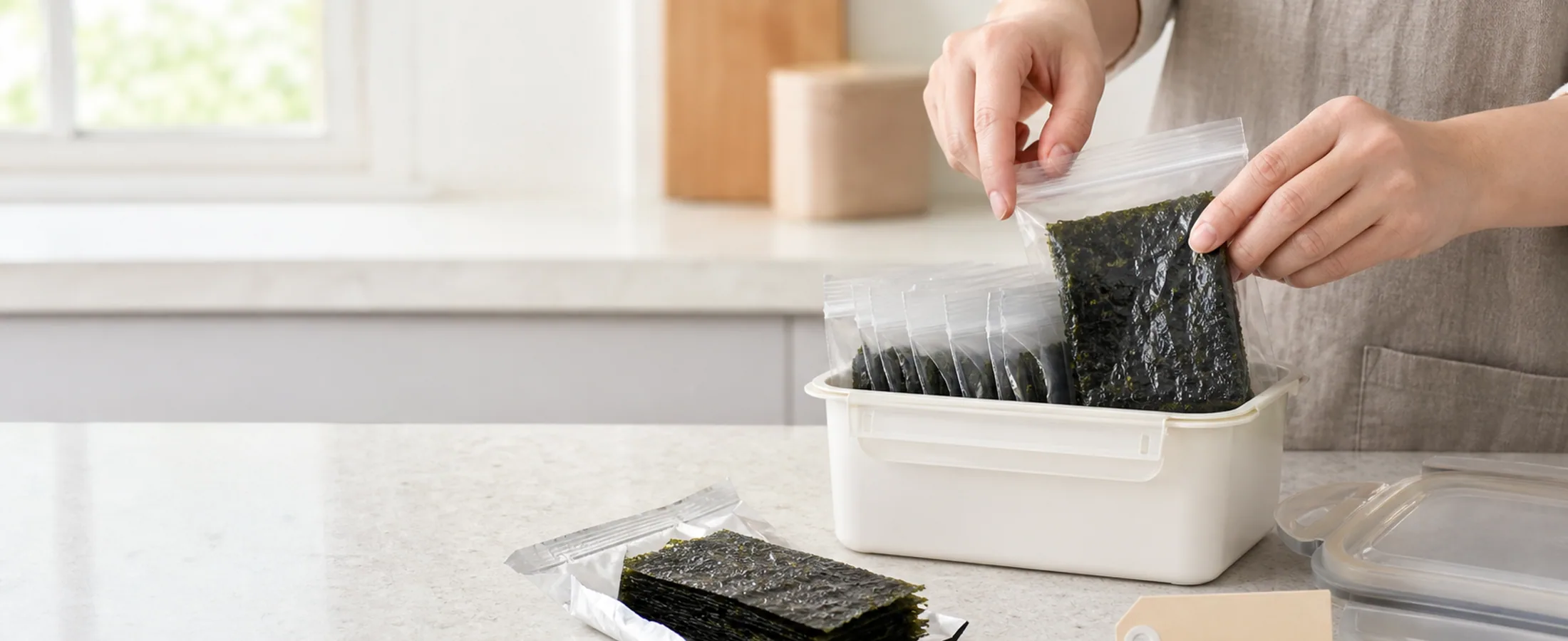
Divide what remains, remove the air and seal it right away.
Gim is thin and has a large surface area, so it quickly absorbs moisture and surrounding odors. Seasoned gim also contains oil, and long exposure to air and light can flatten its roasted aroma. An expensive container matters less than reducing the time the bag stays open and sealing practical serving portions tightly.
The basic storage sequence
Separate the rules for before and after opening, and the process becomes straightforward.
Follow the package directions first
Packaging and seasoning differ by product. Read the label, then keep the unopened package in a cool, dry place away from direct sunlight and heat.
Remove air and use two layers
Divide the remaining gim into serving portions, place them in a zipper bag and press out as much air as possible. Put that bag inside an airtight container for added protection from moisture and odors.
Portion first, then freeze
If you cannot finish the package within a few days—or the weather is hot and humid—freezing sealed portions is practical. Separate portions in advance and prevent condensation inside the package.
Remove only what you will eat
Take out one portion and close the remaining package immediately. Avoid repeatedly leaving frozen gim in a warm room and returning it to the freezer.
Where should I store the gim I bought?
Always check the storage directions on the package first. The table below is general guidance when the product provides no different instruction.
Avoid sunlight, heat and damp areas around the sink.
Even a small package begins absorbing moisture and oxygen as soon as it is opened.
Prevent oil aromas from spreading to other foods and freezer odors from entering the gim.
Freezing is more reliable during humid seasons.
A one-minute routine for opened gim
Organize it once and you can greatly reduce the chance of the last sheets becoming soft.
- 1Separate serving portions
Divide what you will eat within a few days from what needs longer storage.
- 2Press air from the zipper bag
Push out the air carefully without crushing the sheets, then seal the opening.
- 3Place it in an airtight container
Add another barrier so it does not directly contact strong-smelling frozen foods.
- 4Write the opening date
A date makes it easy to finish the oldest open package first.
Habits that make gim lose crispness faster
Leaving the open bag in the refrigerator
Temperature changes and mixed food odors are common in a refrigerator. Gim that is not tightly sealed can become soft rather than stay crisp.
Opening one large container repeatedly
Humid air enters every time the container is opened. Separate a frequently used portion from the longer-term portion at the beginning.
Relying only on the desiccant
A food-safe desiccant has limited effect once the package is left open. Close the packaging firmly instead of depending on the packet alone.
Re-roasting gim with an off smell
Heat may improve a slightly soft texture, but it cannot make rancid or spoiled gim safe again.
If it has become slightly soft
Only if the smell and color are normal, place the gim in a dry pan and warm it briefly over low heat. Check both sides every few seconds, let it cool briefly, and eat it right away.
RememberThis can restore some texture, but it cannot reverse spoilage. If the oil smells rancid, the color has changed unusually or mold is visible, discard the product without reheating it.
Frequently asked storage questions
Do I need to thaw frozen gim?
Gim contains little moisture, so you can remove one portion and eat it immediately. Keep the bag open only briefly because the sheets absorb room humidity quickly.
Can I store gim in the refrigerator?
Follow the package if it specifically requires refrigeration. For typical seasoned gim, tightly sealed frozen storage is often easier for controlling humidity and food odors.
How can I make soft gim crisp again?
If the smell and color are normal, warm the sheet very briefly in a dry pan over low heat. A microwave can scorch gim quickly, so start with a very short interval and check it often.
When should I throw it away?
Do not eat gim with a rancid oil smell, an unusual odor, abnormal discoloration or visible mold. Removing one part or roasting the sheet again does not solve spoilage.